


 25 Feb 2026
Nature Methods Research Demonstrates Superior Exosome Labeling with Vesiculab Extracellular Vesicle Dyes
Enhancing Exosome Flow Cytometry With Vesiculab Extracellular Vesicle Dyes
As highlighted in leading publications such as Nature Methods, reliable extracellular vesicle analysis relies on superior fluorescence dyes. This case study demonstrates how Vesiculab EV dyes outperform conventional dyes for exosome detection in high-sensitivity flow cytometry workflows.
Background
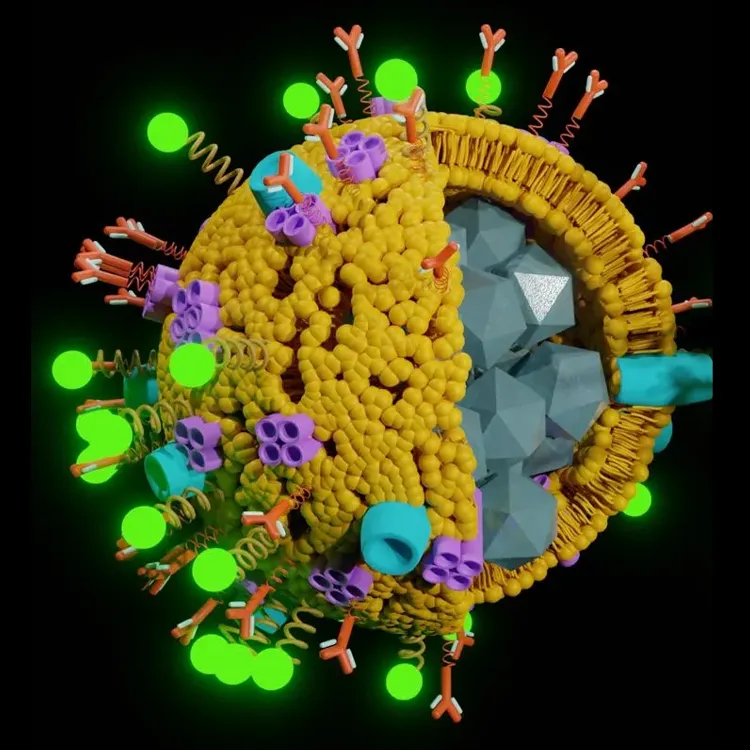
Extracellular vesicles (EVs), including exosomes, are critical biological messengers and diagnostic biomarkers. However, detecting these nanoscale vesicles (30–150 nm) with traditional dyes often results in high background, dye aggregation, and inconsistent flow cytometry data.
A 2025 study published in Nature Methods highlights the importance of optimized fluorescence labeling for reliable EV detection and reproducibility in research workflows.
Challenge
A leading extracellular vesicle research laboratory faced challenges with standard fluorescence dyes when performing exosome labeling for flow cytometry:
- High background fluorescence obscuring small vesicles
- Dye micelles producing false-positive events
- Weak signal intensity from labeled exosomes
- Variability between experimental replicates
Solution
The lab incorporated Vesiculab extracellular vesicle fluorescence dyes into their workflow. These dyes are engineered to reliably label nanoscale exosomes with:
- EV-specific membrane targeting
- Low aggregation dye chemistry
- High signal-to-noise fluorescence intensity
- Compatibility with multiparameter flow cytometry
Results
Upon implementing Vesiculab EV dyes for exosome flow cytometry, the research team observed significant improvements:
- Minimal dye aggregation and clearer event separation
- Strong fluorescence leading to confident detection of exosomes
- Consistent staining across replicates
- Reduced background noise and false positives
- Improved reproducibility and publication-ready data quality
| Parameter | Conventional Fluorescence Dyes | Vesiculab EV Dyes |
|---|---|---|
| Dye aggregation | High | Minimal |
| Background fluorescence | Significant | Very Low |
| Exosome signal intensity | Moderate | High |
| False positive events | Frequent | Rare |
| Reproducibility | Variable | Highly consistent |
| Flow cytometry compatibility | Limited | Optimized for EVs |
Conclusion
As extracellular vesicle research advances, high-performance fluorescence dyes like Vesiculab’s EV dyes are essential for reliable exosome analysis. By reducing artifacts, improving signal clarity, and delivering consistent results, these dyes empower researchers to generate publication-quality data — aligning with standards seen in high-impact journals like Nature Methods.