


 08 Sep 2025
Microscopic Insight for Macroscale Integrity: Using COXEM SEMs in Building Material Quality Control
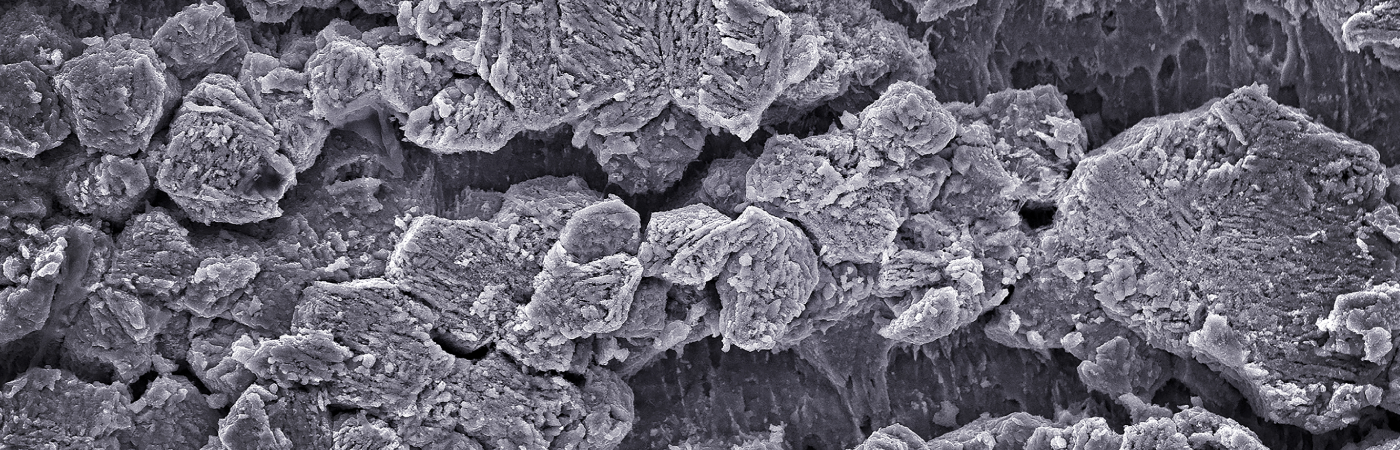
In modern construction and infrastructure projects, the strength, durability, and longevity of materials like cement, bricks, and insulation are paramount. Subtle flaws at the microscopic level—such as improper particle bonding, phase separation, or microcracking—can lead to catastrophic performance failures over time. Traditional quality control methods are no longer sufficient on their own. Enter Scanning Electron Microscopy (SEM), and more specifically, COXEM’s benchtop SEM systems, which are bringing high-resolution imaging and elemental analysis to material labs, QA facilities, and R&D centers across the construction sector.
Unlike conventional optical tools, COXEM SEMs allow inspectors and material scientists to visualize the surface and subsurface of building materials down to nanometer resolution. When combined with Energy Dispersive X-ray Spectroscopy (EDS), they enable not just imaging, but also chemical characterization of samples. This combination is transforming quality control in key materials used in building and infrastructure.
Cement: Microstructure Defines Macroscale Strength
Cement and concrete materials are complex composites where microstructure directly influences compressive strength, setting time, durability, and resistance to environmental degradation.
With COXEM SEMs, professionals can analyze:
- Hydration product morphology: Identification and characterization of C–S–H (calcium silicate hydrate), ettringite, and portlandite crystals—key to understanding strength development.
- Porosity and microvoids: Visualizing capillary pores (10–100 nm) and air voids (up to 1 mm) to assess permeability, freeze-thaw durability, and chloride ingress vulnerability.
- Aggregate interface bonding (ITZ – Interfacial Transition Zone): Evaluate how well cement paste bonds with aggregate particles. A weak ITZ is often the first site of failure under stress.
- Crack propagation paths: Detect early microcracks (<1 µm) before they become visible or structural, revealing issues in curing, thermal stress, or material compatibility.
- Elemental distribution via EDS: Confirm homogeneous mixing or detect deleterious elements like sulfur, chloride, or alkali-silica reaction products.
Bricks and Ceramics: Uniformity and Crystallinity Matter
Brick and ceramic materials must endure high compressive loads and weathering. Their performance is often tied to microstructural homogeneity and firing process control.
COXEM SEMs are used to assess:
- Grain size distribution: Identifying non-uniformities or oversized inclusions that compromise compressive strength.
- Void distribution: Detecting gas pockets and micropores that reduce density and create stress concentration points.
- Surface roughness and glaze integrity: Ensuring adhesion quality and aesthetic uniformity.
- Phase separation or sintering defects: Revealed as unmelted or overfired regions, indicating firing issues.
- Mineral inclusions and reaction zones: Using EDS to identify high-iron or high-alumina regions that could lead to efflorescence or color variations.
Insulation Materials: Microstructure Drives Performance
Thermal insulation products, whether mineral wool, EPS/XPS foam, aerogels, or fiberglass, are defined by their porosity, uniformity, and cell structure.
COXEM SEMs can quantify:
- Pore morphology: Shape, size, and connectivity of pores (open vs. closed-cell) affect thermal conductivity and moisture resistance.
- Fiber dispersion and bonding (in fiberglass or rock wool): Irregular bonding or clustering reduces effectiveness and fire resistance.
- Cell wall thickness: In foams, wall thickness determines mechanical resilience and vapor diffusion rate.
- Surface defects or contaminants: Dust, oils, or residues on insulation surfaces may degrade performance or affect adhesion.
- Additive distribution: Using EDS, confirm presence of flame retardants, fillers, or anti-fungal agents.
COXEM SEM: Compact Power for Building Material Labs
COXEM’s desktop SEMs offer magnifications of up to 150,000× and resolutions below 5 nm, with optional EDS capabilities. Their user-friendly software, low maintenance, and small footprint make them perfect for construction material labs, academic institutions, or QC departments that can’t support a full-size SEM.
Key features that make COXEM SEMs ideal for building material analysis include:
- Low vacuum mode for imaging uncoated or non-conductive samples like insulation or untreated bricks.
- Automated stage control to scan across large samples like core sections or tile fragments.
- Integrated EDS for on-the-spot chemical analysis, particularly helpful in failure analysis or forensic investigations.
Conclusion: A New Standard in Construction Material Testing
Whether you’re trying to improve concrete mix design, troubleshoot faulty bricks, or optimize insulation performance, a COXEM SEM gives you the microscopic insight necessary to make informed, data-driven decisions. In industries where safety, performance, and compliance are non-negotiable, SEM analysis is no longer optional—it’s essential.
Ready to upgrade your quality control capabilities? Visit www.coxem.com or contact your local distributor to schedule a live demo and explore how a COXEM SEM can support your materials research and testing workflows.