


 08 Sep 2025
Summarized Infographic: Bionavis MP-SPR vs. Traditional SPR
| Feature | Bionavis MP-SPR | Traditional SPR |
|---|---|---|
| Optical Setup | Multi-angle & multi-wavelength | Single-angle & single-wavelength |
| Data Output | Binding kinetics + layer thickness + RI | Binding kinetics only |
| Sensitivity (RIU) | ~10-5 to 10-8 | ~10-7 (higher sensitivity) |
| Multilayer Modeling | Yes | No |
| Sample Types | Biomolecules, cells, exosomes, membranes | Mainly purified biomolecules |
| Structural Info | Yes (thickness, swelling, conformation) | No |
| Typical Applications | Material science, exosomes, membranes | Drug discovery, antibody screening |
| Throughput | Moderate | High (automation available) |
Detailed Application Guide: Choosing Between Bionavis MP-SPR & Traditional SPR
- Drug Discovery & Screening
- Traditional SPR
- Industry standard for screening small molecules, antibodies, and peptides.
- High sensitivity (RI change ~10⁻⁷), ideal for detecting low molecular weight compounds.
- Supports high-throughput automation for large compound libraries.
- Limited to purified biomolecules.
- Bionavis MP-SPR
- Can perform binding kinetics but less sensitive for small molecules.
- Useful when additional structural information is needed during screening.
- Lower throughput compared to traditional SPR.
Recommendation: Use Traditional SPR for routine high-throughput drug screening.
2. Biomaterial & Surface Coating Characterization
- Bionavis MP-SPR
- Excels at measuring thickness and refractive index of biomaterial coatings.
- Supports multilayer analysis and conformational changes (e.g., swelling).
- Ideal for polymers, hydrogels, and nanoparticle coatings.
- Traditional SPR
- Cannot differentiate layer thickness or structural changes.
- Limited to measuring binding events.
Recommendation: Use Bionavis MP-SPR for detailed surface and material characterization.
3. Nanoparticle & Exosome Research
- Bionavis MP-SPR
- Measures size, protein corona formation, and binding kinetics on exosomes and nanoparticles.
- Provides label-free thickness and refractive index data.
- Supports analysis in complex media and biological fluids.
- Traditional SPR
- Can measure binding but no structural or thickness information.
- Less suited for heterogeneous or complex samples.
Recommendation: Use Bionavis MP-SPR for comprehensive exosome and nanoparticle studies.
4. Cell Interaction & Membrane Studies
- Bionavis MP-SPR
- Supports live cell and lipid bilayer assays on sensor surfaces.
- Measures real-time interactions without labels.
- Captures conformational changes during interaction.
- Traditional SPR
- Limited compatibility with cells.
- Mostly used with purified proteins.
Recommendation: Use Bionavis MP-SPR for cell-based assays and membrane interaction studies.
5. Kinetics & Affinity Studies
- Both Systems
- Provide real-time kinetic analysis (association/dissociation rates, affinity constants).
- Suitable for protein-protein and protein-ligand interaction studies.
- Traditional SPR
- Superior sensitivity for low molecular weight analytes.
- Widely validated and supported in pharmaceutical research.
- Bionavis MP-SPR
- Offers additional parameters alongside kinetics.
- Better for complex or multilayer systems.
Summary Table: Application Focus
| Application | Bionavis MP-SPR | Traditional SPR |
|---|---|---|
| Small molecule drug screening | Moderate | Excellent |
| Protein-protein kinetics | Excellent | Excellent |
| Biomaterial layer analysis | Excellent | Poor |
| Nanoparticle/exosome studies | Excellent | Limited |
| Cell interaction studies | Supported | Limited |
| High-throughput screening | Limited | Excellent |
Technical Comparison: Bionavis MP-SPR vs. Traditional SPR
1. Fundamental Operating Principles
| Application | Bionavis MP-SPR | Traditional SPR |
|---|---|---|
| Small molecule drug screening | Moderate | Excellent |
| Protein-protein kinetics | Excellent | Excellent |
| Biomaterial layer analysis | Excellent | Poor |
| Nanoparticle/exosome studies | Excellent | Limited |
| Cell interaction studies | Supported | Limited |
| High-throughput screening | Limited | Excellent |
Summary:
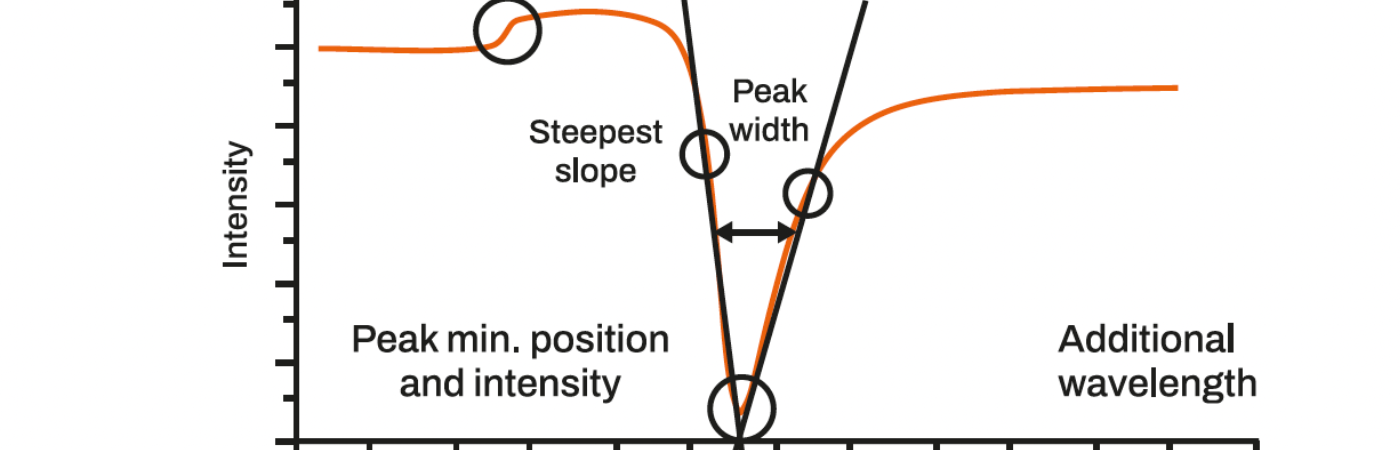
Bionavis MP-SPR collects more comprehensive optical data by scanning SPR angular spectra over several wavelengths, while traditional SPR captures a single intensity shift at a fixed angle.
2. Measurement Capabilities
| Parameter | Bionavis MP-SPR | Traditional SPR |
|---|---|---|
| Binding Kinetics (ka, kd, KD) | Yes | Yes |
| Molecular Layer Thickness | Yes, quantitative (0.5–1000 nm range) | No, qualitative only |
| Refractive Index Sensitivity | Moderate (~10-5 to 10-8 RIU) | High (~10-7 RIU), excellent for small molecules |
| Multilayer Modeling | Yes, can deconvolute multilayers | No, only bulk refractive index changes |
| Structural Changes Monitoring | Yes, conformational and swelling changes | No |
Summary:
MP-SPR excels at characterizing complex, multilayered or structural changes in biomaterials, whereas traditional SPR offers higher sensitivity for detecting very low mass changes.
3. Data Analysis & Outputs
| Feature | Bionavis MP-SPR | Traditional SPR |
|---|---|---|
| Raw Data | Full angular reflectivity curves at multiple wavelengths | Single SPR angle/intensity shifts |
| Output Parameters | Thickness, refractive index, mass, kinetics | Response units correlating with mass bound |
| Layer Composition Insights | Possible through optical modeling | Not possible |
| Visualization | 3D spectral-angular plots | 2D sensorgram curves |
Summary:
MP-SPR provides richer datasets enabling deeper insights into sample composition and structural properties, beyond just binding kinetics.
4. Instrumentation & Flexibility
| Feature | Bionavis MP-SPR | Traditional SPR |
|---|---|---|
| Sensor Surface Flexibility | Highly customizable (gold, graphene, TiO₂, glass) | Typically gold-coated glass, limited variants |
| Sample Types | Biomolecules, nanoparticles, cells, membranes | Mostly biomolecules and purified samples |
| Cell-based Assays | Supported (cells grown on sensor surface) | Limited compatibility |
| Multiparametric Measurements | Yes | No |
Summary:
Bionavis MP-SPR’s open architecture supports diverse materials and complex biological interfaces, while traditional SPR is optimized mainly for purified molecular interactions.
5. Applications
| Application Area | Bionavis MP-SPR | Traditional SPR |
|---|---|---|
| Drug Discovery (small molecule) | Possible but less sensitive | Industry standard, highly sensitive |
| Biomolecular Interaction Studies | Yes | Yes |
| Nanoparticle & Exosome Research | Excellent (layer thickness, corona) | Limited (only bulk binding) |
| Biomaterial Characterization | Yes (surface coatings, swelling) | No |
| Cell Interaction Studies | Supported | Limited |
6. Advantages & Limitations
| Aspect | Bionavis MP-SPR | Traditional SPR |
|---|---|---|
| Advantages |
|
|
| Limitations |
|
|
7. Summary Table
| Feature | Bionavis MP-SPR | Traditional SPR |
|---|---|---|
| Optical Configuration | Multi-angle, multi-wavelength | Single-angle, single-wavelength |
| Data Output | Thickness, RI, kinetics, structure | Binding kinetics only |
| Sensitivity (RIU) | ~10-5 to 10-6 | ~10-7 |
| Multilayer Modeling | Yes | No |
| Sample Compatibility | Cells, nanoparticles, membranes | Purified biomolecules |
| Typical Applications | Material science, exosomes, membranes | Drug discovery, antibody screening |
| Throughput | Moderate | High (automation available) |
Conclusion
- Bionavis MP-SPR is ideal for researchers needing multiparametric analysis of complex biological systems, such as exosomes, biomaterial coatings, and cell interactions. Its ability to provide layer thickness and refractive index information in addition to kinetics makes it uniquely powerful for structural studies.
- Traditional SPR remains the gold standard for highly sensitive, real-time kinetic studies of biomolecular interactions, especially in drug discovery and antibody development. Its simpler data and higher throughput suit routine screening tasks.
Choosing between them depends on your research focus: if you require rich, multilayer structural information beyond binding kinetics, Bionavis MP-SPR is the better choice; if your priority is sensitive detection of small molecules and robust kinetic assays, traditional SPR platforms excel.